
Case reference: MAID-BC-2025-CFXF · Kelowna, British Columbia · Died by MAID · Recorded by the register as a MAID victim
Who he was
Victor Enns was a poet and writer. His wife, Michelle Hewitt, told Parliament he “enjoyed life. He had a wicked sense of humour, he cared for everything that was going on in the world, and he had a deep love for his family.” He and Hewitt met in 2021 on a disability-focused social networking site, and he moved from Gimli, Manitoba, to Kelowna, B.C., to be with her. They married that August. Before he died he launched his final book, Always Breathe, at the Kelowna Art Gallery.
He had lived with chronic depression since his twenties, but about 30 years earlier, Hewitt testified, he had found psychiatric care and medication that kept it under control. The most disabling part of his life was chronic pain from severe osteoarthritis; he had had his left leg amputated after a failed foot fusion surgery.
What happened
Pain control was the thread that held his life together, and the health system cut it. In 2022 he lost his family doctor. “This precipitated a series of events that led to his losing access to that opioid and being prescribed too much of something else, which led to respiratory depression, hypoxia and a week in a medical coma,” Hewitt testified. Afterward he was prescribed Suboxone. He wanted his original opioid back, but was told he could not have it in case he had another respiratory depression and died. Canadian Affairs reported that the only B.C. doctor who would prescribe painkillers was an addiction specialist, and that for the rest of his life he felt labelled as an addict.
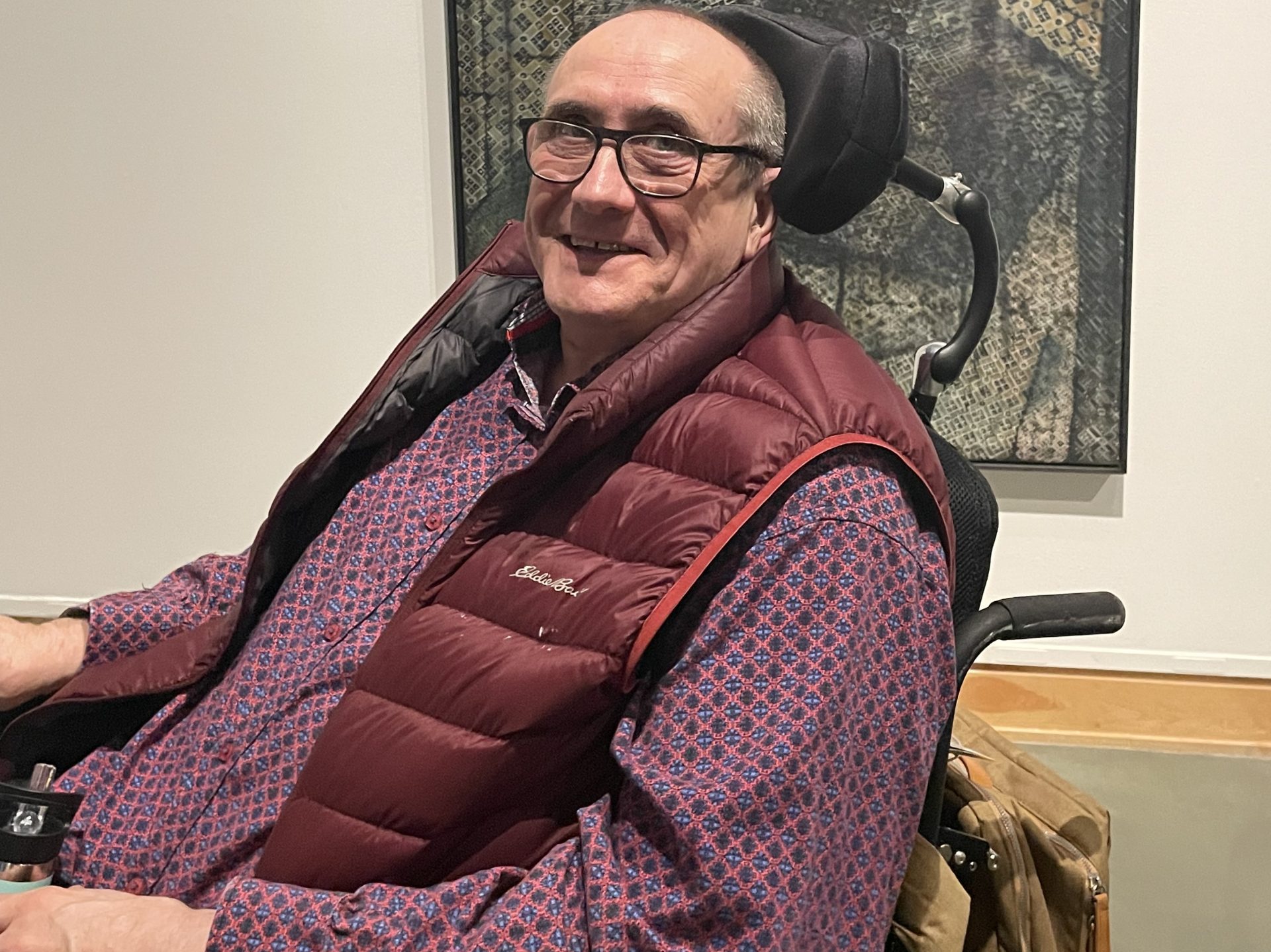
Photo: Davina Kula, via Canadian Affairs (source)
Early in 2025 he was diagnosed with early dementia, though testing could not tell how much his medications or the coma played into it. He submitted MAID paperwork in May 2025, “still thinking of it as something for the future,” Hewitt said. At the first assessment, “within 10 minutes of arriving, including introductions and explanations of what MAID is, Victor was told that the assessor had already decided he had qualified.” The second assessor spent the visit on paperwork and left “telling us when his holidays were so that Victor could plan his death around them.” “They were so fast. They weren’t worth talking about,” Enns told Canadian Affairs five days before he died.
He died by MAID in a Kelowna hospice on 9 December 2025. Hewitt testified that he was made to lie on a bed far too early despite his pain, that the doctor arrived late, and that without painkillers he ended up “screaming for them to kill him.” The IV had to be reset, and the couple shouted their goodbyes across the room.
Why they were pushed toward MAID
Victor Enns was pushed toward MAID by pain the health system stopped treating. “Victor was no more likely to die in the foreseeable future than I am from my MS,” Hewitt told the committee. “There was never any attempt, as designated in the legislation, to try to see whether other options would help him. They never saw us again until his life ended through MAID.” Canadian Affairs reported that the couple were never told which track he was approved under; Hewitt says he was never offered counselling, disability or community supports.
“From that time onwards, Victor’s mental illness worsened as his paranoia increased, his pain increased and he reached the limit of the Suboxone,” Hewitt testified. “The sum total was that, with no support and no pain control, he chose MAID.”
What their family says
Hewitt, who has multiple sclerosis and chairs Disability Without Poverty, has long warned about MAID. She set her objections aside and supported her husband’s request, calling it “one of the hardest decisions I’ve ever made.” But she says the process confirmed her fears. “It was easier for Victor to get MAID than it was for him to get anything else,” she told Canadian Affairs.
To Parliament she said: “Victor did not want to die.” And: “I don’t think Victor’s experience is an outlier. The current MAID program is severely broken, and it doesn’t do what you think it does. Victor was not in control. The only thing he is is dead, and he didn’t want to die. He felt he had no other option.”
What this case shows
Victor Enns lost his doctor, then his pain medication, then his hope, and MAID was the one door that opened quickly. His case shows how the loss of ordinary care can steer a disabled person toward death, and how assessments that take minutes can end a life that months of real treatment might have eased.
Sources
- House of Commons, Special Joint Committee on MAID: Evidence No. 004 (45th Parliament), 21 April 2026 – testimony of Michelle Hewitt
- Canadian Affairs: ‘The only thing left’: One woman’s journey from MAID critic to MAID widow
- Parliament of Canada: Special Joint Committee on MAID, Report No. 1 (45th Parliament)
Leave a Reply