
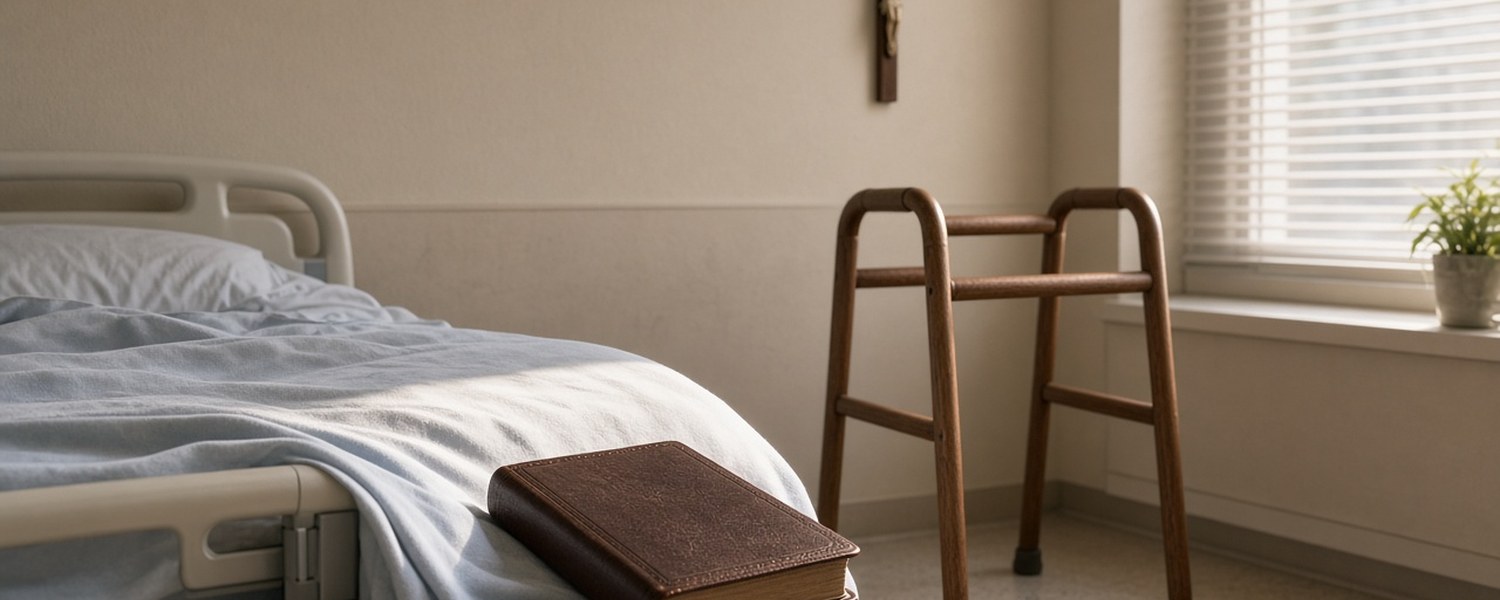
Father Larry Holland is a Catholic priest of the Archdiocese of Vancouver. He is 79, has served at numerous parishes, and has completed studies in health-care chaplaincy.
He fell in his bathroom and fractured his hip. While he was recovering at Vancouver General Hospital, a doctor brought up MAID as an option should his condition deteriorate. “I think I was very shocked,” he told The B.C. Catholic. “It is such a sensitive subject.” He was not dying then and is not dying now, he said. The mention of MAID left him “kind of silent” for a moment, and the doctor raised it again, saying it was “something they have to discuss with someone who’s been given a terminal diagnosis.” Father Holland told the doctor he was morally opposed to euthanasia.
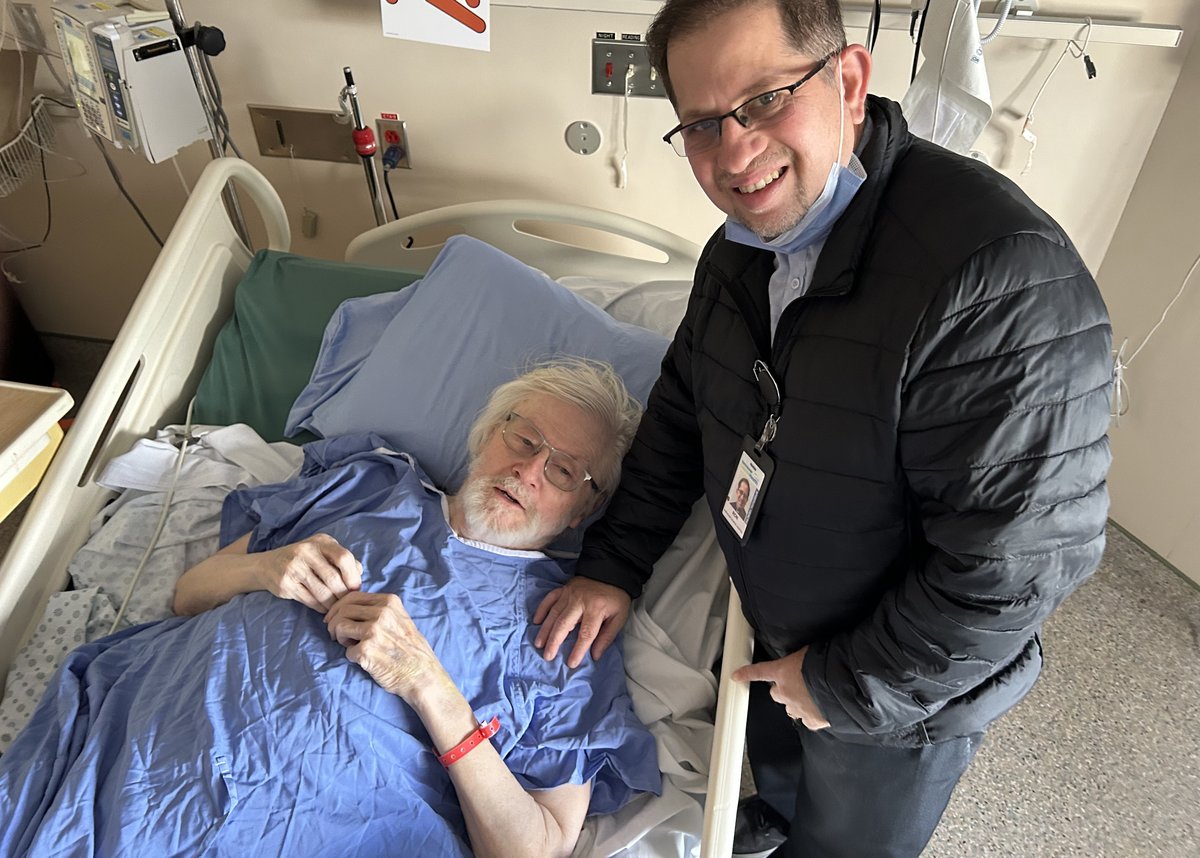
Photo: Terry O'Neill, The B.C. Catholic (source)
Weeks later, a nurse raised MAID with him a second time. He said she seemed uncomfortable and was likely acting out of compassion because of the pain he was in. “It’s a false compassion, really,” he said. “There are some things you just don’t talk about to some people.” He admitted the pain was such that he could “feel the temptation” to accept. “It’s a human reaction. We always look for the easy way out.”
Vancouver Coastal Health, which runs VGH, told The B.C. Catholic that “staff may consider bringing up MAiD based on their clinical judgment, provided they possess the necessary knowledge and skills to do so.” The paper reported that the Canadian Association of MAiD Assessors and Providers advises clinicians that they may have a professional obligation to start a discussion about MAID if a patient might be eligible, and warns against assuming that people of faith oppose it.
Father Holland shared his story to help others. “I went through it; you can go through it too,” he said. Turning down an offer of death, he said, opens a person to new experiences: even enduring pain “can motivate you, it can open up new worlds, new vistas, new opportunities.”
He had a broken hip, not a terminal illness, and staff knew he was a priest opposed to euthanasia. Still, twice in one hospital stay, MAID was put in front of him. His case shows how routinely MAID is now raised with older patients in pain at Vancouver General Hospital, the same hospital where Miriam Lancaster and Kathrin Mentler were offered it, and how even a person with firm convictions can feel its pull.
Sources
Case reference: ACT2-DVQH-3YC5-4XFS · Vancouver, British Columbia · MAID raised by others; not requested · Recorded by the register as a MAID victim
Leave a Reply