The Cruel Theater Of Displacement: How Australian Councils And State Governments Fail Their Homeless Population
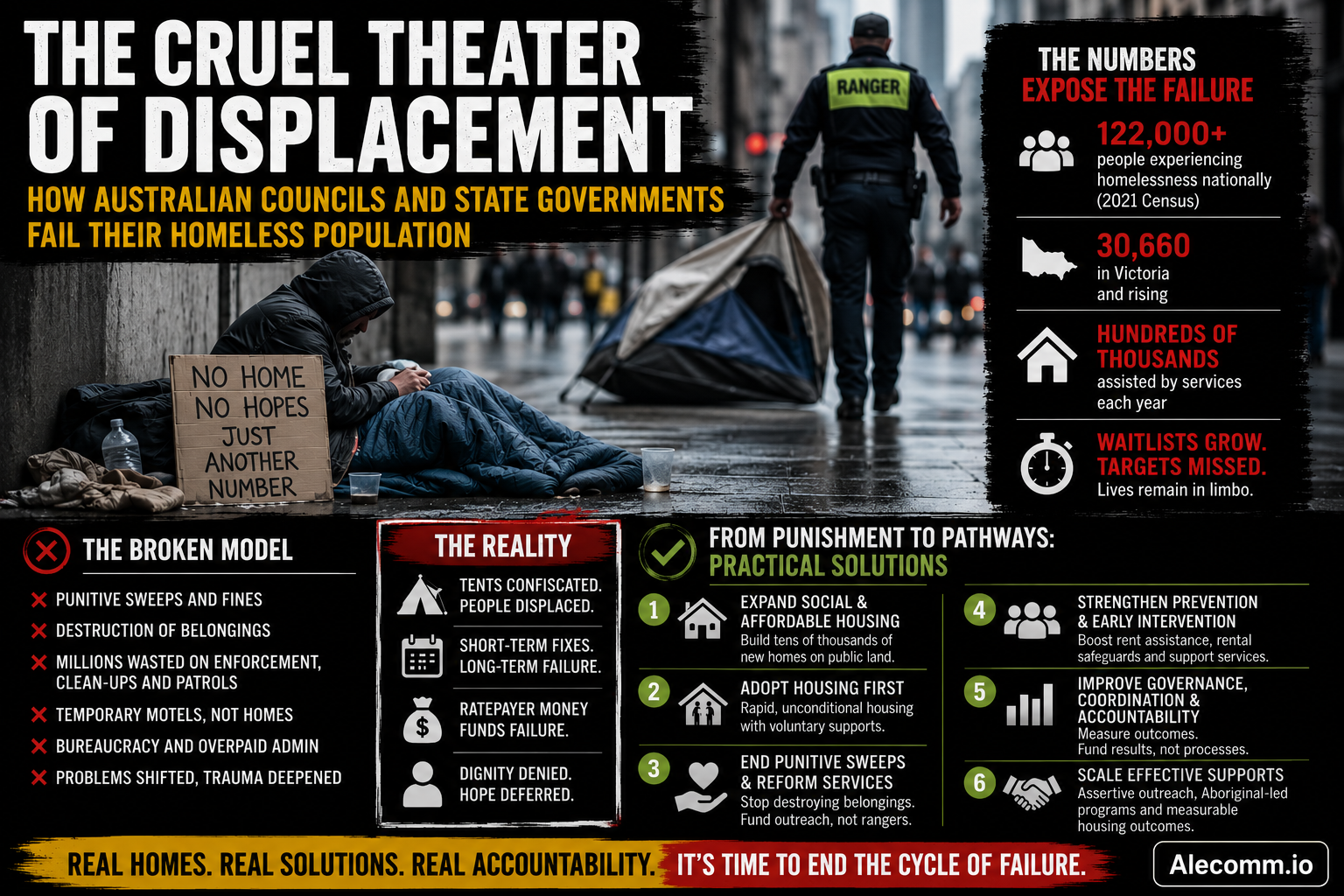
Australian councils and state governments rely heavily on enforcement to manage homelessness, with rangers conducting repeated sweeps that confiscate and destroy tents, bedding, and personal items. Fines and displacements follow, without real solutions. This punitive cycle, funded by ratepayers, merely shifts the problem while compounding trauma.
Councils, flush with taxpayer revenue, waste millions on patrols, seizures, and clean-ups rather than outcomes. State governments defer visible issues to locals while failing on housing policy. Homelessness services, far from underfunded, channel welfare payments into temporary motel rooms and sustain layers of overpaid administrative staff who deliver few permanent housing results.
Victoria’s Orange Door hubs, including those in Shepparton, highlight this problem. Substantial resources yield intakes and crisis responses, yet produce little sustained housing success amid bureaucracy and fragmentation.
The numbers expose the failure:
- More than 122,000 Australians were experiencing homelessness at the time of the 2021 Census.
- Victoria accounted for approximately 30,660 people experiencing homelessness.
- Rough sleeping continues to rise.
- Services assist hundreds of thousands of people each year, yet many remain trapped in cycles of temporary accommodation.
- Public housing waiting lists continue to grow while new housing supply fails to keep pace.
Governments routinely miss housing targets while pouring funds into ineffective enforcement measures and administration-heavy systems instead of permanent housing solutions.
From Punishment To Pathways: Practical Solutions
1. Urgent Expansion Of Social And Affordable Housing
Launch a multi-year program to build or acquire tens of thousands of new social homes on public land. Streamline approvals and redirect enforcement and service administration budgets into direct housing investment.
This approach reduces long-term crisis costs while creating lasting outcomes.
2. Nationwide Adoption Of Housing First
Prioritise rapid, unconditional access to permanent housing combined with voluntary support services for mental health, addiction, and employment.
End the costly cycle of welfare-funded motel accommodation. Evidence consistently shows that Housing First models achieve superior housing retention rates and lower overall system costs.
3. Halt Punitive Sweeps And Reform Service Delivery
Ban the routine destruction of personal belongings.
Shift council spending away from ranger operations and toward housing-focused outreach. Audit homelessness services to reduce administrative bloat, cap non-frontline costs, and tie funding directly to permanent housing outcomes.
4. Strengthen Prevention And Early Intervention
Increase rent assistance, strengthen rental protections, introduce vacancy taxes where appropriate, and expand rapid rehousing programs that transition people into permanent accommodation.
Scale youth support, family support, and domestic violence services while integrating housing outcomes with mental health treatment, addiction services, and employment pathways.
5. Improve Governance, Coordination, And Accountability
Require state governments to meet measurable housing targets and reduce rough sleeping.
Public reporting should track:
- Permanent exits from homelessness.
- Administrative cost ratios.
- Temporary accommodation placements.
- Long-term housing outcomes.
Funding should reward results, not bureaucracy.
6. Scale Effective Supports
Invest in assertive outreach programs integrated with housing, health, and community services.
Support Aboriginal-led housing initiatives and ensure all service contracts are linked to measurable housing stability outcomes.
The Imperative For Change
The current model of lavish enforcement, temporary motel accommodation, and bureaucratic waste represents a profound governance failure in a wealthy nation.
Councils and state governments possess the resources to make meaningful change, yet continue to prioritise displacement and ineffective service models that entrench disadvantage rather than resolve it.
Governments must redirect resources toward permanent housing, Housing First initiatives, reduced administrative overheads, and genuine accountability.
People experiencing homelessness deserve real pathways to dignity, stability, and independence—not endless cycles of displacement, temporary fixes, and systemic failure.
Leave a Reply