The Public Trustee Reform That Refuses To Face The Wreckage
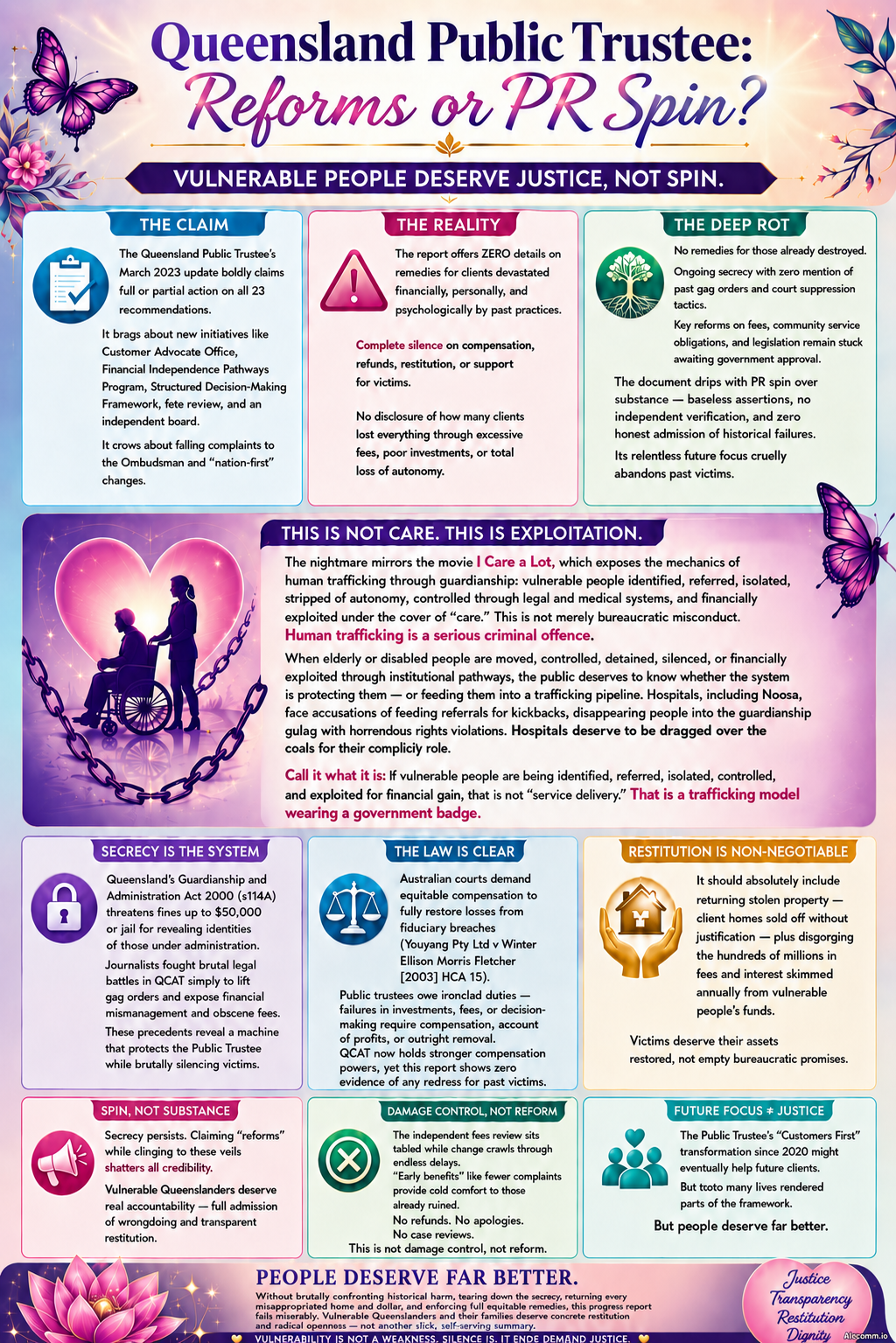
The Queensland Public Trustee’s March 2023 update on implementing Public Advocate recommendations is nothing more than a self-congratulatory corporate pat on the back — slick PR designed to mask systemic failures.
The document boldly claims full or partial action on all 23 recommendations directed at the Public Trustee. It brags about new initiatives like a Customer Advocate Office, Financial Independence Pathways Program, Structured Decision-Making Framework, fees review, and an independent board. It crows about falling complaints to the Ombudsman and “nation-first” changes.
Yet the critical gaps are utterly damning. The report offers zero details on remedies for clients devastated financially, personally, and psychologically by past practices. Complete silence on compensation, refunds, restitution, or support for victims. No disclosure of how many clients lost everything through excessive fees, poor investments, or total loss of autonomy.
Major issues lay bare the deep rot. No remedies for those already destroyed. Ongoing secrecy with zero mention of past gag orders and court suppression tactics. Key reforms on fees, community service obligations, and legislation remain stuck awaiting government approval. The document drips with PR spin over substance — baseless assertions, no independent verification, and zero honest admission of historical failures. Its relentless future focus cruelly abandons past victims.
The nightmare mirrors the movie I Care a Lot, which exposes the mechanics of human trafficking through guardianship: vulnerable people identified, referred, isolated, stripped of autonomy, controlled through legal and medical systems, and financially exploited under the cover of “care.” This is not merely bureaucratic misconduct. Human trafficking is a serious criminal offence.
When elderly or disabled people are moved, controlled, detained, silenced, or financially exploited through institutional pathways, the public deserves to know whether the system is protecting them — or feeding them into a trafficking pipeline. Hospitals, including Noosa, face accusations of feeding referrals for kickbacks, disappearing people into the guardianship gulag with horrendous rights violations. Hospitals deserve to be dragged over the coals for their complicit role.
Call it what it is: if vulnerable people are being identified, referred, isolated, controlled, and exploited for financial gain, that is not “service delivery.” That is a trafficking model wearing a government badge.
Secrecy is hardwired into the system. Queensland’s Guardianship and Administration Act 2000 (s114A) threatens fines up to $50,000 or jail for revealing identities of those under administration. ABC journalists fought brutal legal battles in QCAT simply to lift gag orders and expose financial mismanagement and obscene fees. These precedents reveal a machine that protects the Public Trustee while brutally silencing victims.
Legal precedents expose the scandal. Australian courts demand equitable compensation to fully restore losses from fiduciary breaches (Youyang Pty Ltd v Minter Ellison Morris Fletcher [2003] HCA 15). Public trustees owe ironclad duties — failures in investments, fees, or decision-making require compensation, account of profits, or outright removal. QCAT now holds stronger compensation powers, yet this report shows zero evidence of any redress for past victims.
Restitution must be immediate and uncompromising. It should absolutely include returning stolen property — client homes sold off without justification — plus disgorging the hundreds of millions in fees and interest skimmed annually from vulnerable people’s funds. Victims deserve their assets restored, not empty bureaucratic promises.
Secrecy persists. Claiming “reforms” while clinging to these veils shatters all credibility. Vulnerable Queenslanders deserve real accountability — full admission of wrongdoing and transparent restitution.
The independent fees review sits tabled while change crawls through endless delays. “Early benefits” like fewer complaints provide cold comfort to those already ruined. No refunds. No apologies. No case reviews. This is pure damage control, not reform.
The Public Trustee’s “Customers First” transformation since 2020 might eventually help future clients. La Trobe University endorsed parts of the framework.
But people deserve far better. Without brutally confronting historical harm, tearing down the secrecy, returning every misappropriated home and dollar, and enforcing full equitable remedies, this progress report fails miserably. Vulnerable Queenslanders and their families deserve concrete restitution and radical openness — not another slick, self-serving summary.
Leave a Reply