
Needles, Neglect, and a Nation in Denial
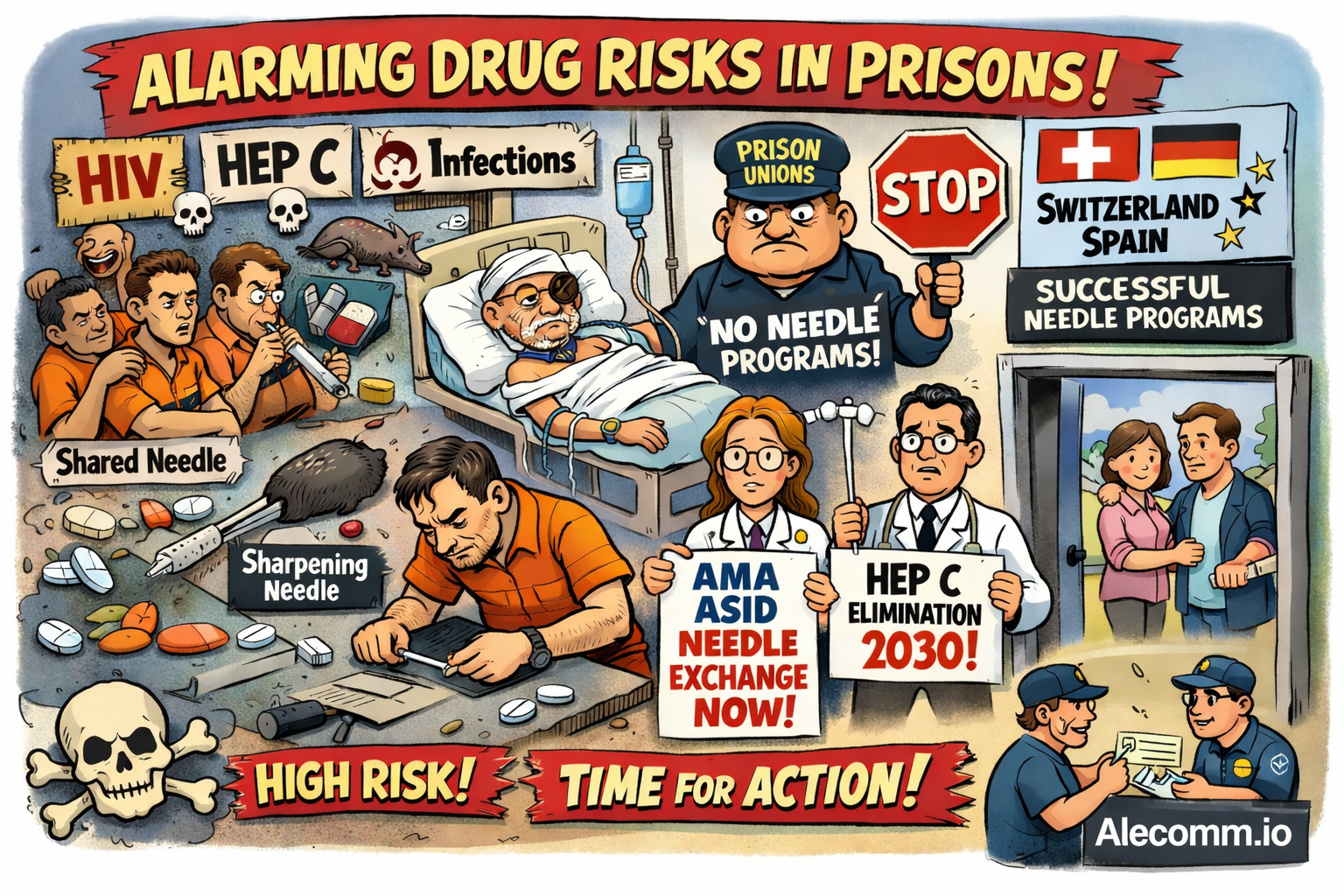
A shocking study reveals the dire state of illicit drug use in Queensland jails, where over 80 prisoners shared a single needle in one day, and one inmate reused the same one for two years. This reckless sharing heightens risks of HIV, hepatitis C, and severe bacterial infections, leading to hospitalizations, permanent disabilities, and near-fatal cases such as spinal infections and induced comas.
Former inmates recounted desperate and dangerous improvisations: crafting syringes from bread bags, pens, and sunscreen tubes, or sharpening blunted needles on concrete floors. Drugs—including smuggled heroin and methamphetamine, or diverted opioid replacement treatments via Band-Aids—fuel this entrenched underground economy.
With Australia’s 47,000 prisoners—including 1 in 7 men and 1 in 20 women injecting inside custody—the absence of needle and syringe programs is deeply concerning. Such initiatives operate in Switzerland and Spain, yet none exist in Australia, despite sustained calls from the Australian Medical Association (AMA) and the Australasian Society for Infectious Diseases (ASID) to curb infections and support hepatitis C elimination by 2030.
Prison unions oppose these programs, citing fears of weaponization. However, this resistance overlooks the measurable human and public health cost. Inadequate healthcare access exacerbates suffering behind bars and increases risks to the broader community upon release. Denying basic harm-reduction measures does not eliminate drug use—it simply makes it more lethal.
Carefully designed pilot programs in low-security facilities could reduce infections, hospitalizations, and long-term healthcare burdens. The evidence is clear. The stakes are high. Action is long overdue.
Leave a Reply