Erase the Data, Jail the Whistleblower: Inside the Tina Peters Case
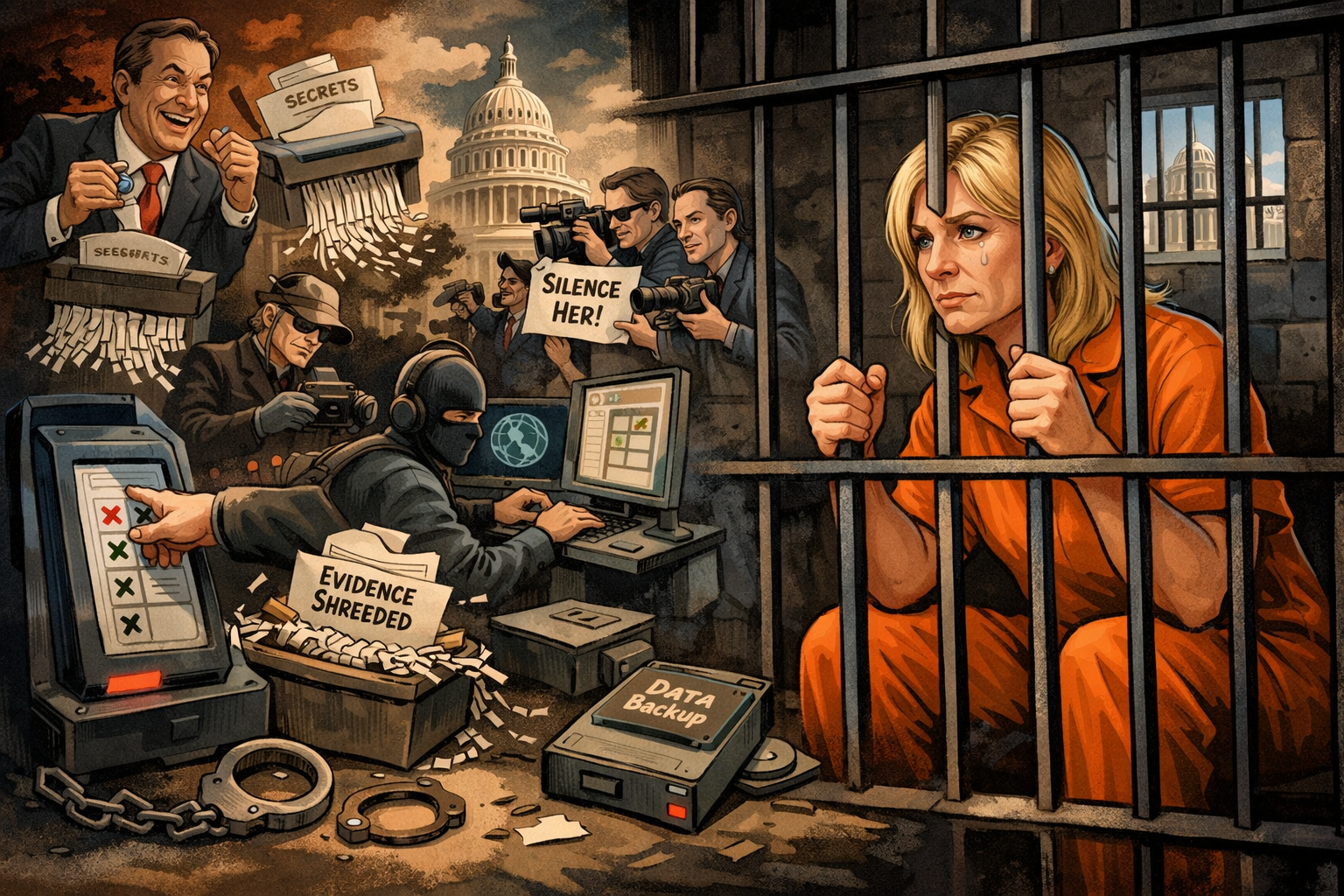
Tina Peters Case (Mesa County, Colorado)
Former Mesa County Clerk Tina Peters is currently serving a 9-year prison sentence — a punishment many argue is wildly disproportionate for what was, at its core, an attempt to preserve election records before they were permanently altered or destroyed.
Peters allowed a computer expert to image the hard drives of Dominion Voting Systems machines prior to a scheduled state update that would have wiped and overwritten critical system data.
Her Position
Peters has consistently maintained that:
- She acted to protect election integrity, not undermine it
- The data she preserved could have been lost forever after the update
- As an elected official, she had a duty to ensure transparency and accountability
From this perspective, her actions were not criminal — they were protective and preventative, aimed at ensuring that questions surrounding the 2020 election could be independently examined.
A Punishment That Raises Questions
A 9-year sentence for preserving data — without evidence of vote tampering or personal gain — has raised serious concerns about:
- Selective enforcement of the law
- Deterrence against whistleblowing
- The broader message being sent to officials who question election processes
Supporters argue that if preserving potential evidence results in years behind bars, it creates a chilling effect where no one will risk exposing possible system vulnerabilities.
Political Response and Pressure
The response from political leadership has only intensified scrutiny:
- Calls for her release, including from President Donald Trump, have been rejected
- All 66 Colorado lawmakers signed a letter urging Governor Jared Polis to keep her imprisoned
To critics, this unified political stance appears less like justice — and more like closing ranks to shut down further inquiry.
Eric Coomer Deposition (Coomer v. Byrne)
In the defamation case Coomer v. Byrne, former Dominion executive Eric Coomer confirmed key facts under oath that continue to fuel concerns about system access.
Key Admissions
- Dominion had a software development team in Serbia
- Remote connectivity to internal systems at the Denver headquarters was possible
Critical Exchange
- Q: “Is Dominion able to remotely connect to these election systems?”
A: “Yes.” - Q: “Are they able to do that without detection?”
A: “Yes.” - Q: “Are you aware of any instances in which that has occurred?”
A: “Yes.” - Q: “Can you identify those instances?”
A: “One would be the Denver, Colorado, server.”
While Coomer denied that this access extended to voting machines during elections, supporters of Peters argue that the mere existence of remote capability raises legitimate questions that warranted investigation — not suppression.
Allegations of Remote Access and Vote Irregularities
A range of analysts and witnesses have put forward claims suggesting that Dominion systems may have been vulnerable to external interference during the 2020 election.
Key Allegations Raised
- Remote access to systems from overseas locations, including Serbia
- Large-scale vote anomalies, including:
- Millions of votes allegedly deleted or altered
- Significant vote shifts in multiple states
Supporters of Peters argue that whether these claims are ultimately proven or disproven is irrelevant to the core issue:
The data needed to verify or debunk these claims should never have been at risk of being erased.
Dominion’s Position
Dominion Voting Systems maintains that:
- All allegations of manipulation are false
- Their systems are secure and not connected to the internet during voting
- Claims against them have been rejected in courts and audits
The Core Issue: Transparency vs. Control
At the heart of this case is a fundamental question:
Should preserving election data be treated as a crime — or as a safeguard?
Supporters of Tina Peters argue:
- Transparency strengthens democracy
- Data preservation is essential for verification
- Punishing those who seek answers undermines public trust
Summary Snapshot
- Tina Peters: Took action to preserve election data before it could be wiped; now serving a lengthy prison sentence
- Supporters’ View: She acted as a whistleblower protecting transparency
- Coomer Testimony: Confirms remote access capability at internal systems, raising further questions
- Broader Debate: Whether questioning election systems is being criminalized instead of investigated
Bottom Line
From this perspective, Tina Peters is not a criminal — she is being framed as a public official who refused to look the other way.
And the real issue isn’t just her case.
It’s what happens when asking questions — or preserving evidence — becomes the thing that gets punished.
Leave a Reply