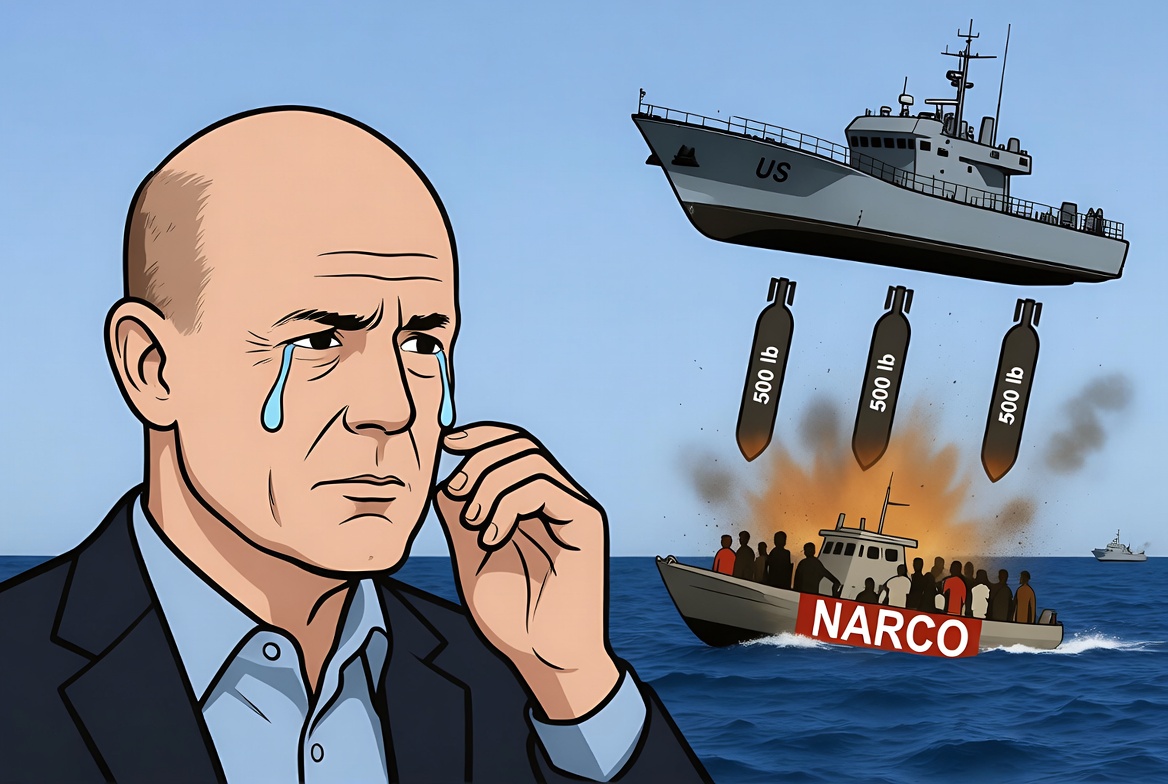
 The Drug Trafficking Vessel Interdiction Assistance Act (DTVIA
(18 U.S.C. § 2285)
This law targets one very specific problem:
drug cartels using “stateless” semi-submersible or fully submersible vessels — the narco-subs you see running cocaine up the Pacific and Caribbean.
They’re designed to be impossible to track, impossible to identify, and easy to scuttle if caught.
Congress finally said: Enough. If you’re crewing one of these things, you’re done.
What the Act Actually Does
1. Makes It a Federal Felony to Operate or Travel on a “Stateless” Drug Vessel
If you are on board a vessel that:
- Has no flag
- No registration
- No markings
- No nation claiming it
- Designed to evade law enforcement
- No legitimate purpose
Then congratulations — under this law, you’re automatically prosecutable.
The government doesn’t have to prove drugs were onboard.
Read that again: They don’t have to catch you with cocaine.
Just being on the vessel is enough.
2. Punishable by Up to 15 Years in Federal Prison
Hard time. No sympathy. No loophole. Doesn’t matter if you’re crew, mechanic, or the poor idiot who got on board for $500.
3. Applies Worldwide
This law reaches you anywhere on the planet, as long as you’re on the high seas.
Congress extended jurisdiction precisely because the cartels thought “international waters” gave them protection. Wrong.
4. Covers Self-Propelled Semi-Submersibles & “Narco-Subs”
These include:
- Low-signature fiberglass submersibles
- Fully submersibles
- “Ghost boats” with almost no radar return
- Any vessel designed to avoid detection
If it’s built to hide, run, or sink itself quickly — DTVIA applies.
5. Even Attempts to Evade / Scuttle Count Against You
If the crew:
- Rips off the ID plates
- Jettisons cargo
- Tries to sink the vessel
- Burns evidence
- Plays stupid (“I don’t know who owns this boat señor”)
It still counts as operating a stateless vessel.
You’re cooked
Why They Created the Act
Cartels kept using these stealth subs because:
- They can haul massive loads
- They’re cheap to build
- They’re hard to catch
- They’re hard to identify legally
- Crews dump the drugs and walk free
Before this law, prosecutors often couldn’t touch the crew because:
- No drugs on board = no trafficking charge
- No ID on the vessel = jurisdiction challenge
- Crews claimed violent coercion
The DTVIA fixed all that by criminalising the vessel itself.
Who This Law Is Used Against
It’s primarily used by:
- Coast Guard
- Navy assets supporting drug interdiction
- DEA / Homeland Security / DOJ prosecutors
These cases are usually slam-dunk convictions because the law was written to be extremely broad.
Where It Fits Into Bigger Operations
It links tightly to:
- Maritime Drug Law Enforcement Act (MDLEA)
- Coast Guard Authority (Title 14)
- Homeland Security maritime interdiction operations
- Joint Interagency Task Force–South (JIATF-South)
Basically, it gives US forces the legal hammer they needed to stop narco-subs dead in the water.
Bottom Line
The Act says:
If you’re on a stealth drug boat anywhere on the high seas, the U.S. doesn’t need your excuses — you’re going to federal prison.
It’s one of the harshest, cleanest, most effective anti-cartel maritime statutes ever written.
Leave a Reply to NGOs screaming “extrajudicial killings” — the real explanation – Alecomm.io Cancel reply