Self-Regulated Feedlot Equals Self-Inflicted Market Closures
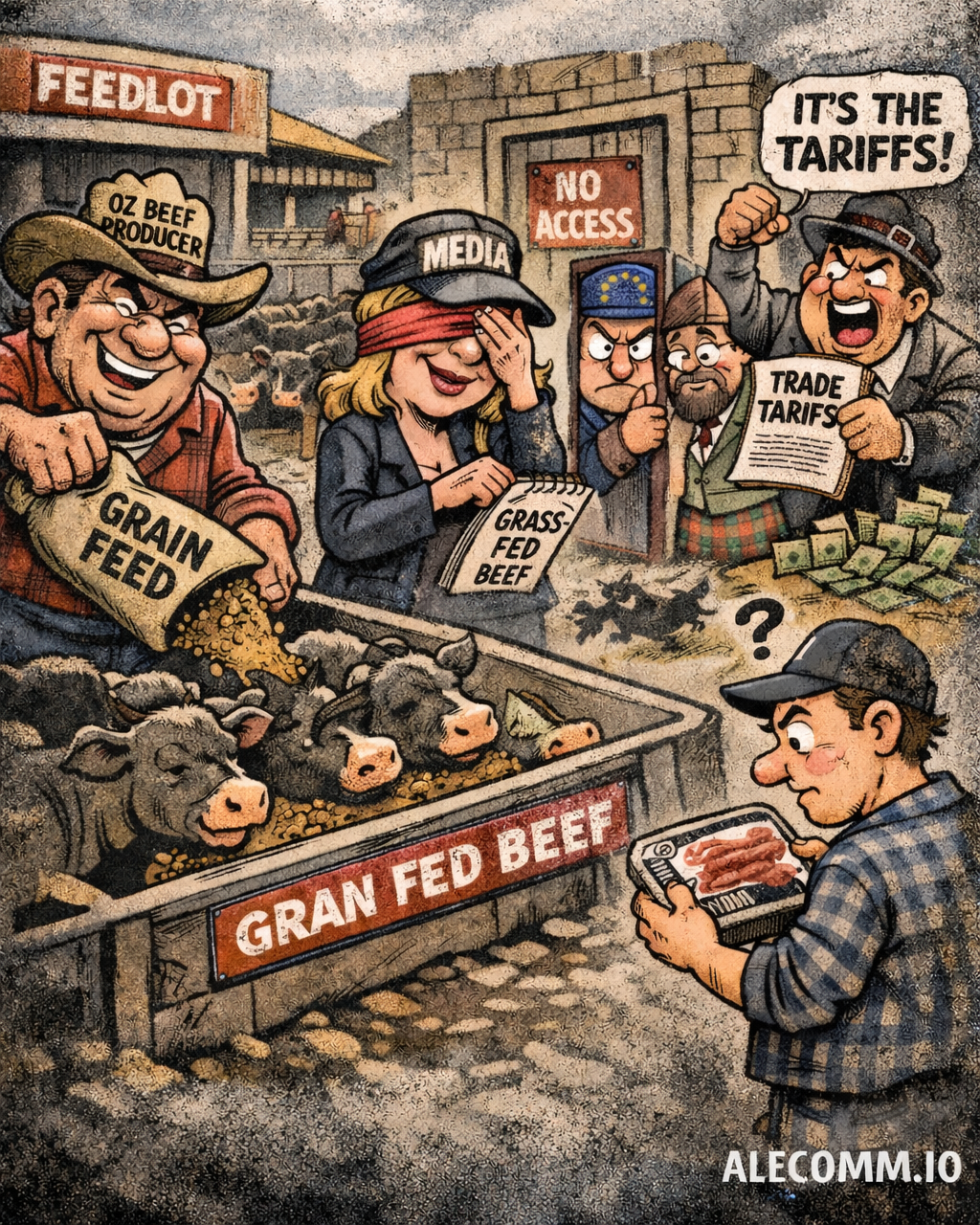
This isn’t complicated.
Australia’s beef reputation was built on grass-fed. That’s the brand global markets bought into.
But too much of what’s being pushed offshore now is grain-fed feedlot beef riding grass-fed coattails — without hard, front-label differentiation.
Export markets see it. And they’re shutting doors accordingly.
European buyers — Scotland especially — will pay 20–30% more for verified pasture beef. The EU’s long-standing rejection of extended feedlot finishing (>70 days) isn’t “archaic protectionism” — it’s product standards.
If you don’t meet them, you don’t get access.
Yet industry spin — echoed by media — keeps blaming tariffs and quotas instead of confronting the real issue: production model mismatch.
Meanwhile Aussie consumers aren’t demanding mandatory GRAIN-FED labeling either — so feedlot product keeps flowing under a grass-fed halo.
Testing narratives don’t help when grain-fed and grass-fed aren’t always separated in reporting pools — meaning the beef being cited could just as easily be pasture product.
So the reality stack looks like this:
• Grain-fed beef leveraging grass-fed reputation
• EU markets rejecting feedlot product
• Industry blaming trade barriers
• Media amplifying the tariff excuse
• Weak domestic labeling pressure
If producers want premium EU access, it doesn’t come from trade complaints.
It comes from owning what’s being produced — and labeling it truthfully.
Leave a Reply