Arun Subramanian: A Judge Who Knew Better — And Did It Anyway
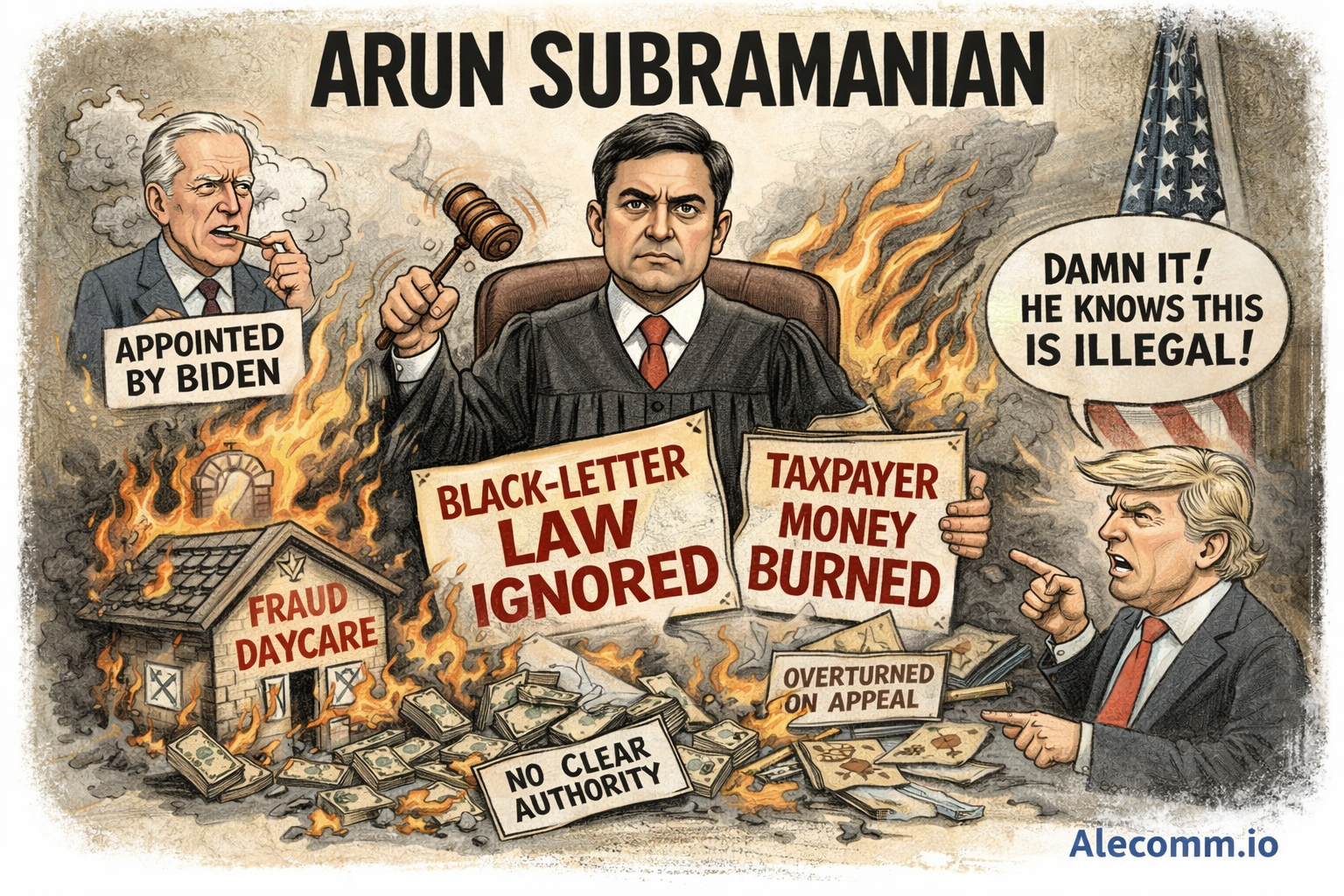
Arun Subramanian, a United States District Judge on the Southern District of New York, has just delivered a ruling that perfectly illustrates why judicial accountability is no longer optional.
Judge Subramanian issued an injunction compelling the Trump administration to disburse taxpayer funds to daycare programs that are already under investigation for systemic fraud across multiple states.
He was appointed in 2023 by .
That context matters — because the legal problem here isn’t subtle.
Federal courts do not have authority to force the Executive Branch to release funds on a specific timeline absent clear statutory command. That principle is black-letter law. The states bringing this case do not have a viable path to winning on the merits, and any competent jurist knows it.
Yet the injunction was issued anyway.
There is no clear statutory authority requiring immediate disbursement of funds to daycare centers without a thorough fraud review. None. Zero. The judge knew this. The record makes that obvious.
Which means this ruling achieves only one thing:
forcing the expenditure of taxpayer money in a case the court itself knows will ultimately fail.
This isn’t judicial interpretation.
It isn’t restraint.
It’s activism via injunction — using temporary orders to override separation of powers, knowing full well the ruling will be overturned later.
And that’s the core issue.
When a judge repeatedly issues decisions that are facially defective, predictably reversed, and designed to create irreversible outcomes before appellate review, the damage is already done — even if the appeal succeeds.
That’s not justice.
That’s governance by bench.
And it’s exactly why a three-strike standard for overturned, indefensible rulings is no longer radical — it’s basic institutional hygiene.
Leave a Reply