
There’s a strange thing about toxic metals: your body can’t burn them, can’t break them down and can’t turn them into anything harmless. A molecule of lead that slipped in from flaking paint in an old Queenslander, or a speck of mercury from a big tuna steak, is still exactly the same lead or mercury years later. The only question is where it ends up, and how much trouble it causes along the way.
So why do some people walk around with a low, steady load of metals and chemicals and feel fine, while others end up exhausted, foggy, achy and unwell for reasons no one can quite pin down? The answer has less to do with the toxin itself and more to do with what it switches off inside your cells.
Uninvited Guests That Pick the Locks
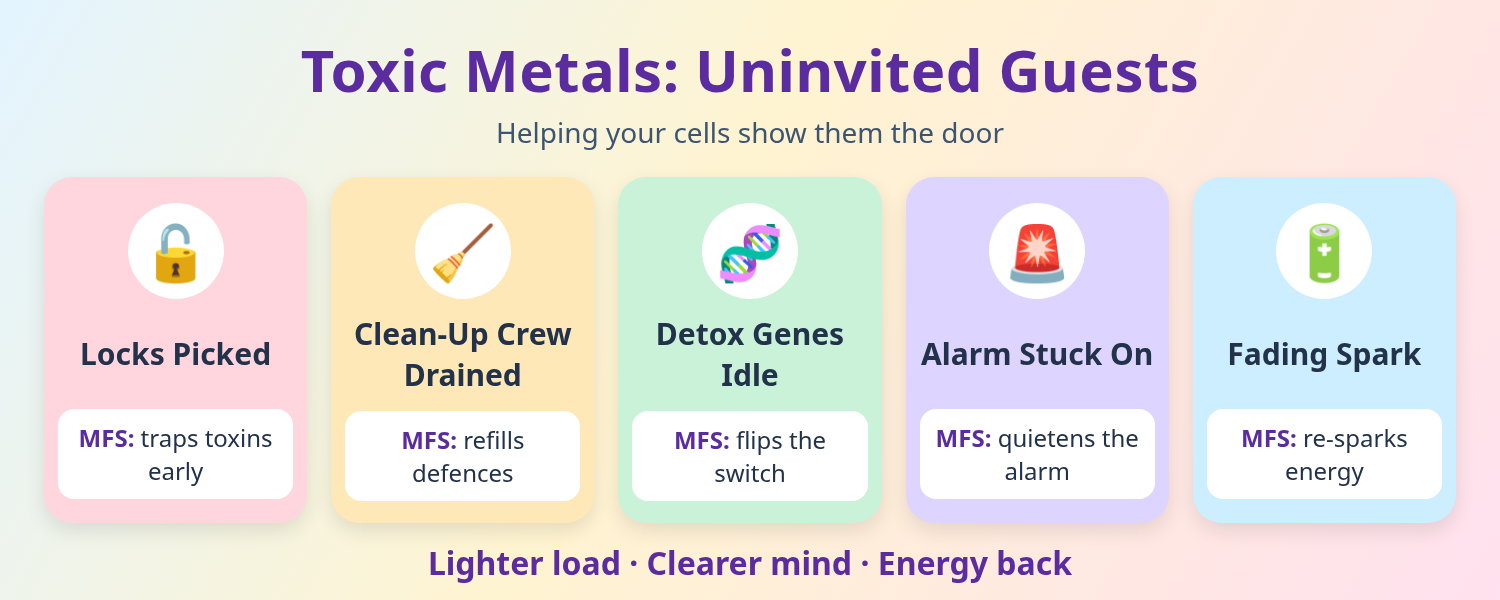
Metals like lead, mercury, cadmium and arsenic are masters of disguise. Many of them look enough like the minerals your body actually needs, such as calcium, zinc and iron, that cells happily let them through the door. Once inside, they latch onto the delicate sulphur-rich “hooks” found on thousands of working proteins and enzymes, jamming them like chewing gum in a lock.
Industrial chemicals play a different game. Farm sprays, solvents and the long-lived pollutants that drift through air, soil and water can mimic hormones, overstimulate nerves or simply hang around in fatty tissue for years. Different culprits, but they tend to land on the same few weak spots.
Cellular Rust and a Fading Spark
The first weak spot is oxidative stress. Toxic metals throw off swarms of highly reactive molecules that scorch cell membranes, damage proteins and nick strands of DNA. Think of it as rust spreading through the wiring of the body.
The second is power. Every cell runs on tiny engines called mitochondria, and metals are especially good at sabotaging them. They gum up the assembly line that turns food into usable energy, so output drops while sparks and smoke rise. That’s a big part of why toxic exposure so often shows up as bone-deep fatigue, weakness, poor concentration and a brain that feels wrapped in cotton wool. Nerve cells, which burn through energy faster than almost anything else, tend to feel it first.
The Clean-Up Crew Runs Out of Supplies
Your body does have a brilliant defence system. Each cell carries its own built-in antioxidant reserve that grabs reactive molecules, binds metals and escorts them out through the liver and kidneys. It’s the closest thing we have to a cellular bouncer.
The catch is that this reserve gets spent every time it’s used. A steady trickle of metals and chemicals can drain it faster than the body can rebuild it. Once the tank runs low, toxins linger longer, damage piles up faster, and the liver’s own detox machinery starts to fall behind. The person might not have had one dramatic poisoning at all. They’ve simply been running on empty for a long time.
An Alarm That Won’t Switch Off
Damaged cells don’t suffer in silence. They send out distress signals that rally the immune system, and those signals spark inflammation throughout the body. In the short term, that’s protective. But when the toxic load never clears, the alarm keeps ringing. Joints ache, skin flares, the gut grumbles, sleep goes shallow and mood starts to wobble. What looks like a dozen unrelated complaints can be one long, unresolved emergency.
Where MFS Comes In
Here’s the encouraging part: because toxic overload works through a handful of shared pathways, it can be met through those same pathways. MFS is built to work on several fronts at once rather than chasing one symptom at a time.
Catching toxins early. Part of MFS works right in the gut, helping to trap unwanted metals and chemicals before they’re absorbed and easing the bloating and digestive upset that often come with a heavy toxic burden.
Refilling the clean-up crew. MFS supports the body’s own antioxidant reserve, helping it rebuild and recycle faster, so cells have the supplies they need to bind metals and carry them out rather than letting them settle in.
Turning on the body’s detox genes. Deep inside each cell is a master switch that, when flipped, ramps up a whole family of protective and detoxifying enzymes. MFS helps nudge that switch on, so the liver and other tissues can process chemical residues more efficiently.
Quietening the alarm. By calming the inflammatory signals that keep firing after toxic injury, MFS helps take the heat out of aches, flares and that persistent “something isn’t right” feeling.
Re-sparking the engines. MFS protects mitochondria from oxidative damage and supports their repair, helping restore steady energy, clearer thinking and a body that bounces back after a big day.
What the Turnaround Can Feel Like
Recovery from a toxic load tends to unfold in layers. Within the first week or two, many people notice the gut settling first, with less bloating and easier digestion. Over the following weeks, energy lifts, sleep deepens and brain fog starts to thin. By the second month, the inflammatory background noise often quietens, skin looks clearer and mood feels steadier. With consistent daily use over three months and beyond, the deeper work shows up: a lighter metal burden, healthier markers and a body that has its defences back in balance.
The Bigger Picture
We can’t always choose what’s in the air we breathe, the water from old pipes, the soil in a mining town or the sprays drifting over the paddock next door. But we can choose how well equipped our cells are to deal with it. Toxic metals may be impossible to destroy, but they don’t have to stay. Give the body’s clean-up crew the tools it needs, and it remembers how to show uninvited guests the door.
Leave a Reply