
Every month, millions of women quietly cancel plans, curl up with a heat pack and wait for the worst of it to pass. Period pain is so common that it is often brushed off as just part of life. Cramps, bloating, a heavy ache low in the back, mood that dips without warning, and a tiredness that sleep never quite fixes.
But what if those cramps were not simply “normal”, and what if the whole monthly storm was being driven by a handful of processes that can actually be calmed?
That is exactly where MFS comes in.
Why a period can hurt so much
Each cycle, the lining of the uterus prepares, then sheds. To push that lining out, the body releases chemical messengers that make the uterine muscle contract. In a balanced system, those contractions are mild. When the messengers are produced in excess, the muscle clamps down hard, blood flow to the area drops, and nerves start firing pain signals.
So the cramp is not the problem on its own. It is the end result of several pressures stacking on top of one another.
The four hidden drivers
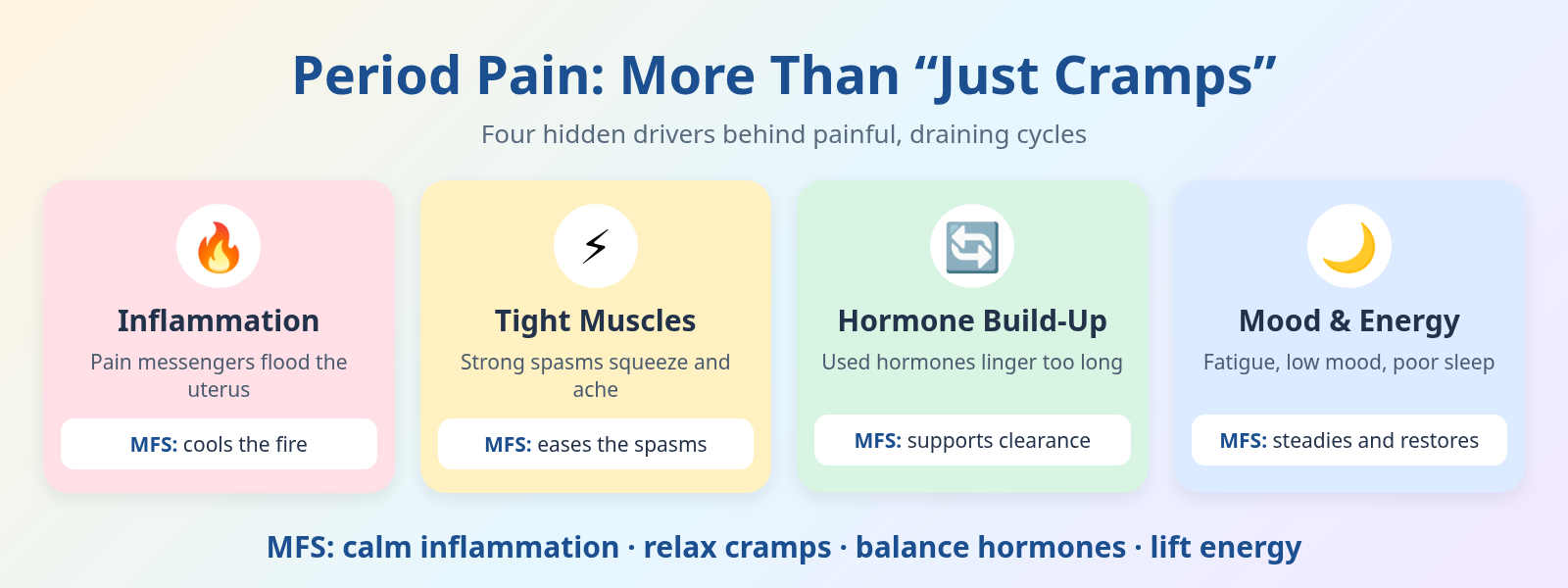
1. Inflammation that runs too hot. The same messengers that trigger contractions are also inflammatory signals. When the immune system overreacts, the pelvis becomes swollen, tender and sensitive, and pain spreads to the back, hips and thighs.
2. Muscles stuck in spasm. A uterus that is over-stimulated contracts harder and longer than it should. Those tight, squeezing waves are what make some days feel unbearable.
3. Hormones that linger. Once hormones have done their job, the body needs to break them down and clear them out. When that clean-up slows, used hormones hang around, feeding bloating, breast tenderness, heavier bleeding and stronger symptoms the following month.
4. Mood, energy and sleep under strain. Pain and hormonal swings pull on the nervous system. Irritability, anxiety, low mood, brain fog and broken sleep all follow, and a tired body feels pain even more sharply. It is a loop, and each turn makes the next one worse.
How MFS steps in
MFS was designed to work on several systems at once, which is exactly what a cyclical, multi-layered problem like this needs.
It cools the inflammatory fire. MFS helps turn down the over-active immune signalling in the pelvis, so fewer pain messengers are produced in the first place. Less inflammation means less swelling, less tenderness and less fuel for cramps.
It eases the spasms. By supporting calmer nerve signalling and relaxed muscle tone, MFS helps the uterus contract in gentler waves rather than painful clenches, and helps dial down how loudly the nervous system registers pain.
It supports hormone clearance. MFS backs up the body’s natural detox and clean-up pathways, helping used hormones be processed and removed on time. That supports a smoother, more predictable cycle with less bloating and fewer of the knock-on symptoms.
It protects energy and steadies mood. MFS supports the tiny power plants inside every cell, helping restore the energy that a heavy cycle drains. It also supports the brain’s own mood chemistry and deeper, more restful sleep, so the emotional rollercoaster becomes more of a gentle slope.
Breaking the monthly loop
The real power of MFS lies in working on all four drivers together. Calm the inflammation and the cramps soften. Soften the cramps and sleep improves. Improve sleep and mood lifts, energy returns and pain feels less overwhelming. Instead of bracing for the next cycle, the body starts to recover between them.
This matters even more for women who also live with fibromyalgia, chronic fatigue or other long-term conditions, who often find their periods hit harder than most. When the whole system is supported, the monthly load becomes lighter.
A different way to think about period pain
Period pain is common, but common is not the same as unavoidable. Rather than simply masking the ache each month, MFS aims to change the conditions that create it: less inflammation, calmer muscles, better hormone balance and steadier energy.
What would your month look like if the cramps did not get to call the shots?
Leave a Reply