
Case reference: MAID-NL-2017-D3TE · St. Anthony, Newfoundland and Labrador · MAID raised by others; not requested · Recorded by the register as a MAID victim
Who she is
Candice Lewis lives in St. Anthony, on Newfoundland’s Northern Peninsula. In 2017 she was 25. She lives with spina bifida, cerebral palsy and a chronic seizure disorder. She communicates verbally, and her mother, Sheila Elson, describes her as an avid painter. A family photo shared with CBC shows her at her easel.
Her mother is her fierce advocate. “I’m not going to let them walk over her and mistreat her anymore,” she said.
What happened
In November 2016, Candice was very sick and in hospital in St. Anthony. Elson says a doctor told her that her daughter was dying and that ending her life was an option. “His words were ‘assisted suicide death was legal in Canada,’” Elson told CBC. “I was shocked, and said, ‘Well, I’m not really interested,’ and he told me I was being selfish.” She says Candice was close enough to hear.
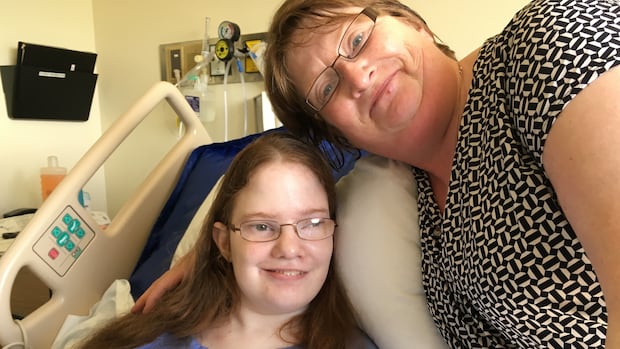
Photo: Submitted by Sheila Elson (family), via CBC News (source)
Social workers later told Elson that she could not make such a decision for her daughter even if she wanted to. Only Candice could. Elson pressed Labrador-Grenfell Health for a response and went public in July 2017. Candice pulled through. A SaltWire report in August 2017 was headlined “Candice Lewis seeing her condition improved.”
Why they were pushed toward MAID
In her mother’s account, MAID was raised by a doctor while Candice was acutely ill and dependent on hospital care, and it was the family, not Candice, who was pressed to consider it. Elson says it fits a wider pattern of disrespect. A nurse, she said, once called Candice a “frequent flyer” because of how often she needed hospital care. “She’s sick. [When] she gets sick, you take her to the hospital. Whether she’s there 10 times a week or 25 times a day, she’s still a human being.”
Labrador-Grenfell Health said it could not discuss the case, but that it had been in touch with Elson and offered a meeting with Candice’s care team. Elson says she was told the doctor did not mean to cause distress. This is the mother’s account; the health authority has neither confirmed nor denied it.
In their own words
Elson says hearing a doctor talk about assisted death was traumatic for her daughter. She wanted a formal apology from Labrador-Grenfell Health.
“I didn’t want another family going through what we went through,” she said. “People like her are being mistreated, and enough is enough.”
What this case shows
Candice Lewis survived that hospital stay and went home to her paints. Her mother’s account is a warning about how disabled people can be seen in hospital, where their lives are treated as less worth saving and death is floated as a kindness. Her case is an early example, from MAID’s first year, of the attitudes that disability advocates have been raising ever since.
Leave a Reply