When You Leak Protective Intelligence, You Become the Threat
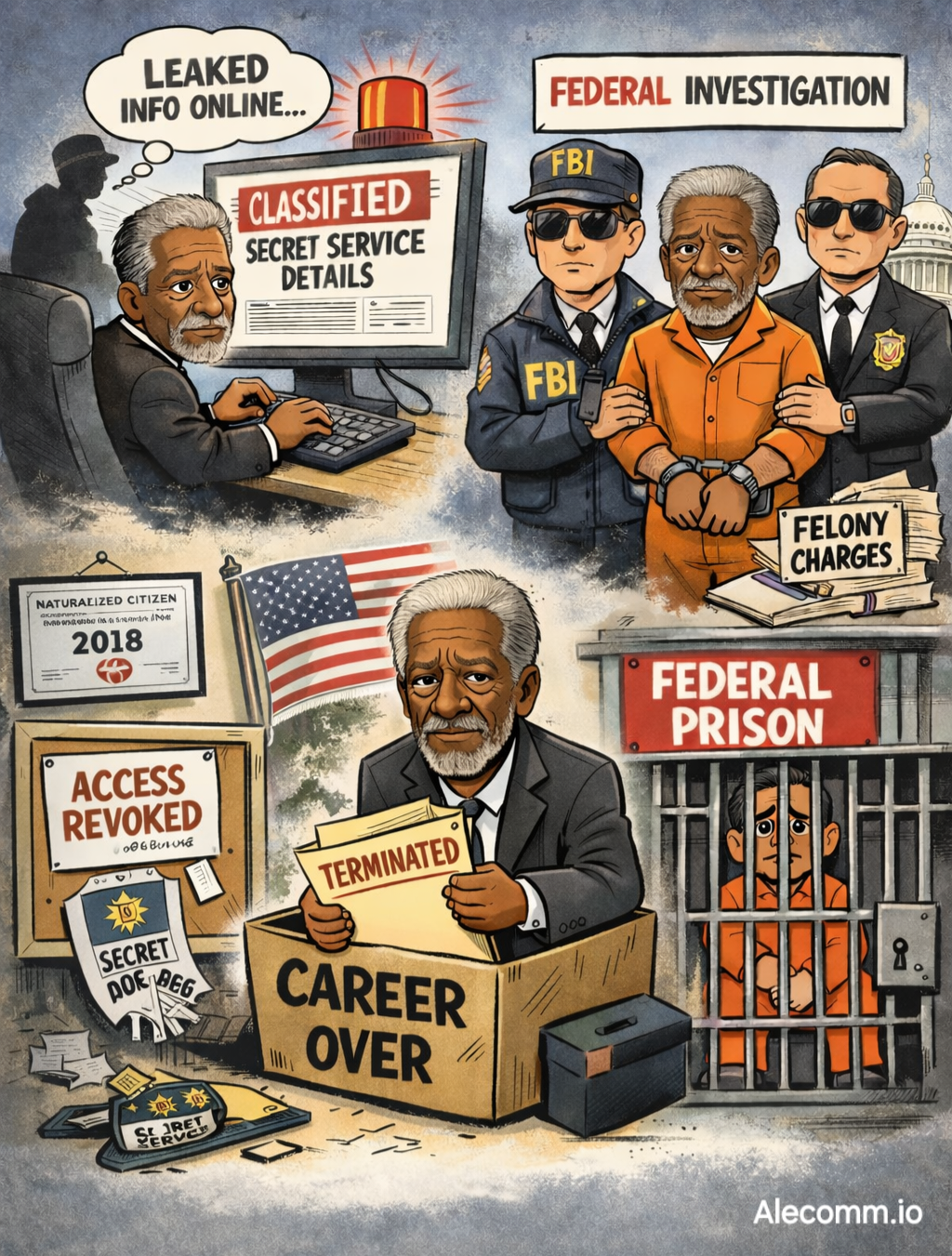
He Knew the Rules. He Took the Oath. He Broke It Anyway.
There are mistakes. There are lapses in judgement. And then there are acts that any reasonable person in national-security space knows are forbidden, yet chooses to commit anyway.
What Tomas Escotto did falls squarely into the third category. This was not ignorance. This was not confusion. This was not whistleblowing.
This was the deliberate public disclosure of Secret Service protective-detail information — the kind of information designed to keep people alive.
He knew better. He did it anyway.
The part no one can hand-wave away
Anyone with access to protective or operational security information is trained — repeatedly — on exactly what cannot be shared. Timing, locations, movements, vulnerabilities, operational context: these are not “opinions.” They are protected intelligence.
You don’t need a “TOP SECRET” stamp to know this. You don’t need a lawyer to explain it. You don’t get to pretend you didn’t understand the risk.
If you’ve been entrusted with that information, you are warned in writing what happens if you leak it.
And he leaked it anyway.
Why this isn’t just a criminal case
Yes, this is felony territory. Prison exposure is real. Careers end over far less.
But there is a second rail running alongside this case that matters just as much:
Citizenship.
Escotto was naturalised in 2018. That matters — a lot.
Naturalisation is not just paperwork. It is an oath. An oath that requires:
- good moral character,
- honesty under penalty of perjury,
- and allegiance to the United States and its laws.
If prosecutors establish that this conduct:
- began before or around the naturalisation period, or
- was concealed or lied about under oath, or
- reveals disqualifying national-security misconduct,
then denaturalisation becomes not hypothetical, but procedural.
And denaturalisation does not require a criminal conviction. It is a civil action, with a lower burden of proof.
Lose citizenship → removal proceedings follow.
That’s the fork in the road:
- Prison, or
- Loss of citizenship and deportation
Sometimes both.
“But he didn’t mean harm” doesn’t matter
Intent to harm is not the standard.
Knowledge and willfulness are.
You don’t accidentally publish protected protective-detail information. You don’t “misunderstand” decades-old security rules. And you don’t get sympathy when you do something that endangers agents, protectees, and future operations.
The system does not care about excuses.
It cares about risk. And once you become the risk, the system removes you.
No pity, no confusion, no gray area
This wasn’t political speech. This wasn’t activism. This wasn’t courage.
It was betrayal of trust — plain and simple.
If the consequences are prison, that’s earned. If the consequence is denaturalisation and deportation, that is also earned.
Oaths mean something — or they mean nothing.
He knew better. He did it anyway. And whatever comes next is not tragedy.
It’s accountability. 🫵
Leave a Reply