The Arrest of Maduro Was Lawful. The Outrage Is Manufactured
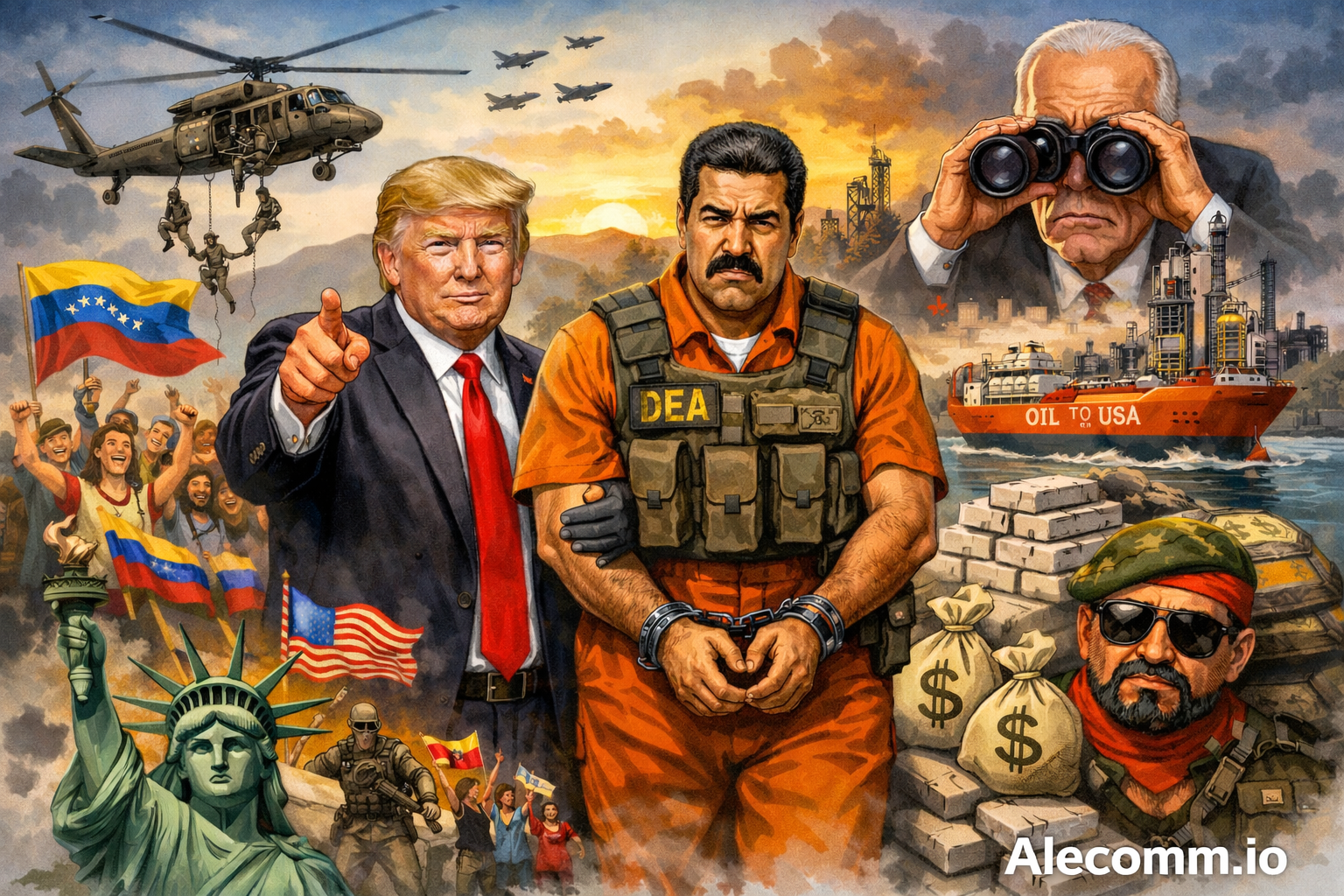
Trump’s Venezuela Action: Enforcing Justice, Securing Stability, and Empowering the Venezuelan People
In a world where weak responses to tyranny too often become the status quo, President Donald J. Trump’s decisive operation to capture Venezuelan strongman Nicolás Maduro represents both a vindication of American justice and an overdue act of accountability for decades of corruption, human rights abuses, and transnational criminality.
On January 3, 2026, United States forces executed a targeted mission in Caracas that resulted in the capture and lawful detention of Nicolás Maduro — a leader indicted since 2020 on federal charges ranging from narco-terrorism to drug trafficking and corruption.
This action didn’t spring from thin air. The U.S. Department of Justice unsealed years-old indictments alleging that Maduro and his inner circle conspired with Colombian guerrilla groups and criminal networks to traffic cocaine into the United States and enrich a kleptocratic regime.
Earlier actions by both administrations — including a $25 million bounty under President Biden and Trump’s subsequent increase to $50 million — reflect bipartisan recognition that Maduro’s activities demanded serious action.
Trump did not act whimsically. He enforced existing law. He fulfilled a warrant that had existed for years — a warrant rooted in documented criminal conduct, not partisan politics.
Why This Matters
For too long, Venezuela has endured:
- Economic collapse under Maduro’s misrule
- Political repression and sham elections
- Humanitarian crises that drove millions to flee
- Criminal syndicates exploiting the state for narcotics profits
These aren’t debatable talking points — they are lived realities for ordinary Venezuelans, many of whom quietly welcomed the removal of a dictator whose policies enriched elites while impoverishing the population.
Many Venezuelan civilians voiced support for removing a regime that has presided over deep economic misery and violent repression — a fact buried in headline narratives. Regardless of how media outlets choose to frame the event, the actual operation puts Maduro squarely before an impartial federal court in New York, where the U.S. legal system will determine his culpability.
Critics Miss the Forest for the Trees
Mainstream outlets have jumped to frame the operation as “illegal” or “unilateral” while overlooking key context:
- Maduro was already wanted under U.S. law — and his capture is consistent with long-standing drug enforcement initiatives.
- The U.S. legal system allows for extradition and prosecution of foreign nationals indicted for crimes affecting Americans and U.S. interests. Maduro is no exception.
- Venezuelans — particularly those who suffered under hyperinflation, repression, and institutional decay — often view this as a step toward liberation, not foreign domination.
Debates about international law and sovereignty tend to ignore the fact that Maduro’s regime flagrantly violated human rights and presided over widespread corruption. Holding individuals to account for crimes they committed isn’t imperialism — it’s justice.
The Oil Angle and Economic Realities
Trump’s announcement that Venezuela will “turn over” millions of barrels of oil to the United States could reshape global energy markets and weaken the strategic grip of rival powers on Venezuelan resources.
This move serves three goals:
- Break the stranglehold of kleptocratic oil deals benefiting hostile nations
- Increase energy supply for Americans at market price
- Give economic leverage to those in Venezuela who want reform
This isn’t resource theft — it’s smart geopolitical leverage following enforcement of legal judgments against a criminal regime.
A New Chapter for Venezuela and the Region
Trump’s move wasn’t about personal political gain. It was about fulfilling a legal obligation long enumerated by federal indictments, about confronting the chaos that allowed illicit organizations to flourish, and about taking a stand when previous punitive measures failed to produce change.
For average Venezuelans who have endured hardship, the promise of justice, stability, and accountability is not an abstraction. And for Americans who have watched illicit drugs and cartels destabilize communities, taking out one of the key enablers signals a commitment to national security.
History doesn’t remember leaders who hesitated in moments that mattered. It remembers those who acted. In confronting Maduro, President Trump did just that.
Leave a Reply