Cheap Imports, Expensive Consequences
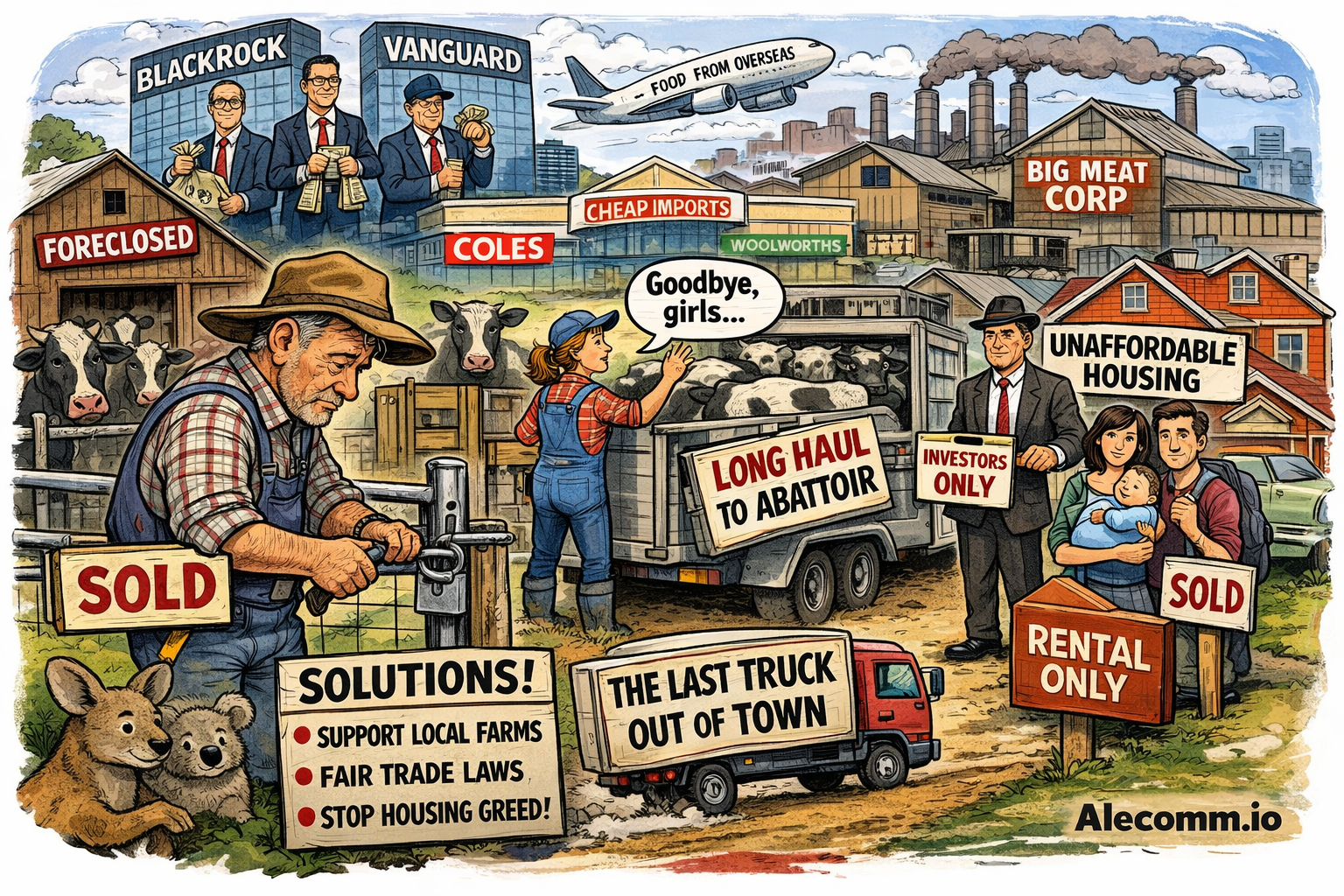
A story about food, homes, and the quiet war nobody voted for
By the time Tom locked the dairy gate for the last time, the sun was just coming up. Same light as always. Same cows watching him. Different ending.
His family had worked that land for three generations. Every cow had a name. Every fence post had a story. But stories don’t pay bills when the price of milk is driven down to the last miserable cent while costs climb like ivy up a brick wall.
Tom didn’t lose the farm because he was bad at farming.
He lost it because the system decided he wasn’t efficient.
How the Game Was Rigged
Years earlier, far from Tom’s paddock, the rules were rewritten in glass towers by people who’ve never stepped in mud. Capital pooled. Ownership concentrated. Supply chains stretched halfway across the planet. Asset managers like BlackRock and Vanguard didn’t need to hate farmers. Indifference works just as well. They funded the giants. The giants squeezed the suppliers. Supermarket duopolies like Coles and Woolworths leaned on farmers to cut prices again. And again. And again. When locals couldn’t meet the numbers, cheaper imports filled the shelves ~ food grown under standards that would never pass inspection here. Same label. Lower cost. Different rules.
The Slow Death of “Paddock to Plate”
Tom’s neighbour, Sarah, raised beef. Proper paddock-to-plate. Minimal stress. Local processing. Full traceability. Until the local abattoir shut. Bought out. “Restructured.” Capacity shifted.
The nearest facility now sat hundreds of kilometres away, owned by a multinational processor like JBS. Fuel costs exploded. Transport stress rose. Margins vanished.
Sarah sold half her herd. Then the rest. Not because consumers didn’t want local meat ~ but because the chokepoints had been captured.
The Illusion of Choice
People said, “Just shop independent.” But even that door was closing. The friendly local grocer with different signage? IGA. The wholesaler behind it? Metcash. Follow the money far enough and you end up back at the same pools of capital.
Different logos. Same gravity.
When Farms Die, Countries Follow
Nobody held a press conference when Tom’s farm closed. No emergency session of parliament. Just another “business decision.” But farms aren’t widgets. Once they’re gone, they’re gone. No food security means no national security. Not someday. Immediately.
A country that can’t feed itself is one shipping delay, one geopolitical hiccup, one trade dispute away from panic.
Meanwhile, the Same Thing Happened to Houses
In town, Tom’s kids couldn’t afford to buy. Homes had become assets first, shelter second. Institutional buyers outbid families. Rentals tightened. Prices climbed. Wages lagged. The younger generation wasn’t lazy ~ they were competing with spreadsheets. More people arrived. Demand rose. Politicians smiled. Conglomerates profited.
More mouths. More rent. More consumption. More control.
Here’s the part the story can change.
Leave a Reply