From the Bench to the Body Count
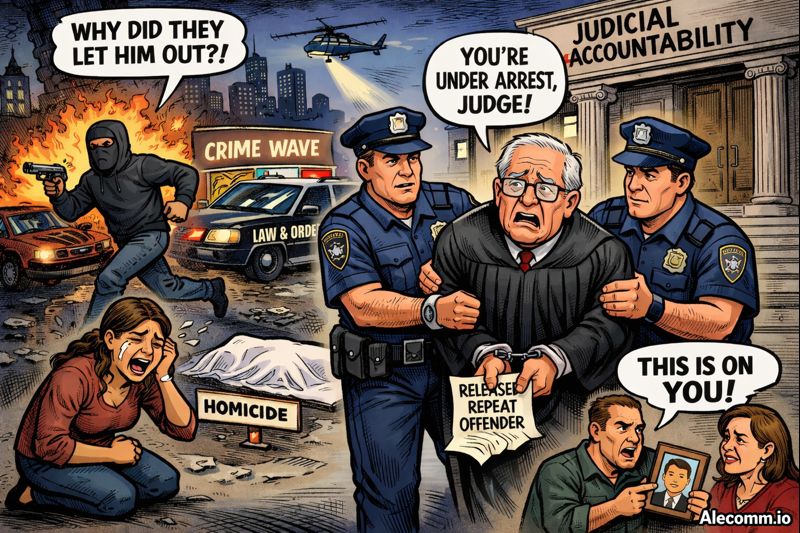
When Leniency Becomes Liability
Every time a violent repeat offender is waved back onto the street, the decision doesn’t vanish with the stroke of a pen. It ripples outward ~ into neighborhoods, families, emergency rooms, and graveyards. Judicial decisions have consequences, and pretending otherwise has cost real lives.
Bail reform and so-called “second chances” were sold as compassion. In practice, they’ve too often become a revolving door for known offenders, with judges insulated from the fallout while victims carry permanent damage. When a court knowingly releases someone with a documented history of violence, that is not mercy ~ it is a calculated risk imposed on the public without consent.
In many cases, the danger is not hypothetical. Federal law enforcement has already issued detainers requesting that certain offenders be held in custody for transfer to ICE for deportation, specifically to prevent further crimes. These requests exist for one reason: to remove individuals who have demonstrated they are a threat. Yet some judges deliberately refuse to honor those detainers, releasing offenders back into the community despite clear warnings and lawful mechanisms designed to stop the violence.
The result is entirely predictable. Crimes committed after release are not accidents ~ they are the foreseeable outcome of ignoring risk assessments, prior convictions, and federal custody requests. When someone is assaulted, raped, or killed after a judge overrides these safeguards, responsibility does not end at the bench.
No other profession enjoys this level of immunity. Engineers are liable for unsafe bridges. Doctors are liable for reckless negligence. Corporate leaders are liable when decisions predictably harm others. Judges should not be uniquely shielded when their discretionary choices enable preventable violence.
This is not about vengeance. It is not about politics. It is about responsibility. Judicial independence was never meant to mean freedom from consequences when lives are destroyed. When policy-driven leniency overrides public safety and federal safeguards, accountability isn’t extreme ~ it is essential.
Leave a Reply