Seditious Six
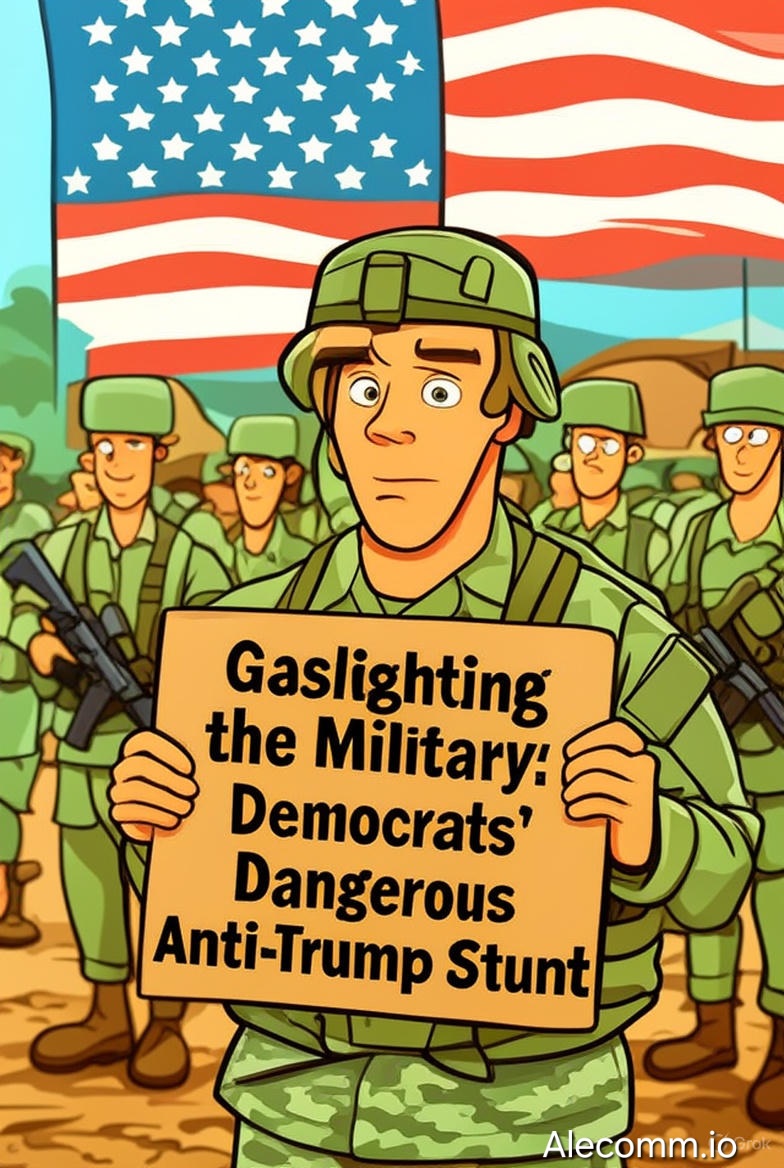
Kelly wasn’t just flapping his gums in a campaign ad.
He and other Democrats told active-duty military personnel to defy presidential orders in advance, based on nothing but political fiction.
That crosses a red line.
It doesn’t matter that he’s a senator.
Civilians — especially public officials — can absolutely be criminally liable if they attempt to corrupt the chain of command, encourage insubordination, or interfere with military duties.
Here’s the legal artillery.
1. 18 U.S.C. § 2387 — “Sedition / Anti-Military Interference”
Title: Activities affecting armed forces generally
This statute explicitly applies to ANYONE — civilian or military.
The law:
It is a federal crime to:
- “Knowingly counsel, urge, or in any manner cause insubordination, disloyalty, mutiny, or refusal of duty”
in the U.S. military. - “Disseminate” or participate in communications encouraging that behavior.
Penalty:
Up to 20 years in federal prison.
Why Kelly fits:
He urged troops to pre-emptively refuse presidential orders that he claimed — with zero legal basis — would be “illegal.”
That is textbook urging insubordination.
2. 18 U.S.C. § 2384 — Seditious Conspiracy
If multiple politicians appear in a coordinated video to undermine the military’s obedience to lawful command, it satisfies the conspiracy requirement.
The law:
Two or more people who conspire to:
- Oppose the authority of the United States by force, OR
- Prevent, hinder, or delay execution of any U.S. law
are guilty of seditious conspiracy.
Why Kelly fits:
A coordinated messaging campaign telling service members to ignore commands from the Commander-in-Chief hinders execution of lawful authority.
There were multiple lawmakers involved.
That is literally a conspiracy — even if done on camera.
3. 18 U.S.C. §372 — Conspiracy to Impede or Injure a Federal Officer
This one is nasty and absolutely relevant.
The law:
It is illegal to conspire to:
- “Impede”
- “Intimidate” or
- “Interfere”
with any federal officer in the performance of their duties.
The President and all uniformed officers are “federal officers” under statute.
Why Kelly fits:
Telling troops to refuse orders directly impedes the constitutional duties of the President, the Secretary of Defense, and every commander in the chain of command.
You cannot interfere with the execution of lawful military authority just because you hate the man in office.
4. 18 U.S.C. § 2385 — Advocating Overthrow of Government Authority
No, Kelly wasn’t calling for revolution.
But the statute absolutely covers attempts to undermine lawful military operations or chain-of-command authority.
It criminalizes:
- Teaching, advocating, or encouraging the duty to resist the U.S. government
- Including through “political” or “instructional” means
Kelly’s video literally instructs service members to reject federal authority based on hypothetical political scenarios.
This is not protected speech.
This is instructional advocacy to reject government authority.
5. 10 U.S.C. § 888 (Article 88) — Contempt Toward Officials
This one applies only to military members.
BUT — civilians can be charged under 18 U.S.C. §§ 2387 / 2384 for inducing military members to violate Article 88 or any UCMJ article.
Kelly encouraged troops to disobey orders and undermine respect for the Commander-in-Chief.
He encouraged behavior that would violate Article 88 and Article 92 if service members acted on it.
That makes him criminally liable under Title 18.
6. 18 U.S.C. § 371 — General Federal Conspiracy
Even if prosecutors couldn’t nail him on sedition statutes, they can easily use this one.
The law:
Conspiracy to:
- Commit any offense against the United States
- OR defraud the United States
is punishable by 5 years.
Interfering with the lawful execution of executive military authority counts as “defrauding” the government of its lawful function.
This is exactly how the DOJ nails political actors when the primary charge is politically sensitive.
This is the “Al Capone tax evasion” route.
Clean. Effective. Air-tight.
7. The Constitutional Angle — The Big One
Article II, Section 2 — Commander-in-Chief Clause
The President alone commands U.S. forces.
Telling troops to defy him isn’t “speech.”
It’s interference with constitutional authority.
Article I does NOT give senators immunity for:
- Inciting military insubordination
- Interfering with the chain of command
- Pre-emptively delegitimizing presidential authority
- Coordinating messaging that undermines lawful military execution
The Speech & Debate Clause does not protect coordinated public propaganda outside the legislative chamber.
Kelly CAN and SHOULD be charged because:
- He encouraged insubordination (18 U.S.C. §2387)
- He conspired with others to undermine lawful authority (§2384, §372, §371)
- He attempted to impede federal officers performing constitutional duties (§372)
- He advocated resistance to lawful U.S. authority (§2385)
- He interfered with the Commander-in-Chief’s constitutionally exclusive power
- He engaged in a political conspiracy to destabilize military command structures
This wasn’t “political critique.”
This was an attempt to pre-emptively delegitimize presidential authority in the eyes of active-duty military personnel.
That is exactly what Congress criminalized after WWI and WWII — to prevent civilian political actors from weaponising the military.
Kelly walked straight into that minefield.
And yes — he should be charged.
The statutes are clear, the conduct fits, and the precedent is deadly if ignored.
If you want, I can draft the formal legal brief, indictment-style, with charge counts and evidentiary foundation.
Leave a Reply